The truth can make you nervous for a moment.
A lie can keep you nervous indefinitely.
I learned that lesson through a police officer, a legal deposition—and two children caught with ice cream all over their faces.
LESSONS IN TRUTH TELLING
PAUSE FOR CAUSE
I remember learning some important lessons about truth telling when I was a young man.
One day, a police officer stopped me because of a questionable driving maneuver. While he was checking my license and record, I was mentally preparing something quick, witty or possibly profound enough to convince him to let me go.
You know how the mind works when it suddenly decides it has become a defense attorney. LOL.

WE WERE READING EACH OTHER
The officer and I had developed a good rapport. I had not committed some slam-dunk violation, and he appeared willing to hear my side.
He returned to my car smiling and relaxed. Then he asked one simple question:
“Have you ever been ticketed?”
That question caused my entire driving history to flash before me.
THE HALF-TRUTH APPEARS
I had not been ticketed lately.
There it was—the half-truth, standing nearby and volunteering for duty.
If I answered carefully enough, perhaps I could avoid admitting the whole truth. If I admitted everything, I thought I would surely receive another ticket.
Me oh my—the woes of a misspent, ticketed youth. LOL.
After a second of hesitation, I answered:
“Yes. I have been ticketed.”
HE ALREADY KNEW
The officer explained that my driving record showed the previous tickets.
He already knew the answer.
He was not asking because he needed information. He was giving me an opportunity to establish credibility.
If I told the truth about my record, he could more easily believe what I said about the current situation.
He told me to be more careful, wished me a good day and allowed me to leave.
THE RELEASE
I thanked him while fighting back tears.
Why tears?
The hesitation had produced doubt, fear and a rush of adrenaline. When the truth finally came forward, all that pressure was released.
I understood something that day:
The truth sets you free—even before you know the final outcome.
ANOTHER TRUTH TEST
In another youthful incident, I was giving testimony about pain and suffering following a minor traffic accident.
My claim had some legitimacy, although I may have been stretching parts of it. I believed I had rights, and I was exercising them—possibly with a few extra stretches.
Then I was asked whether I had ever been injured before.
Once again, hesitation entered the room.
WHAT SHOULD I REVEAL?
I worried that admitting a previous injury would give the opposing side an excuse to blame my current pain on something from the past.
Why should I help their case?
That was my thinking.
But previous medical history can be relevant in a legal claim, and records may be requested when they relate to the injury being discussed.
The person questioning me appeared to know more than I realized.
“I DON’T RECALL”
I initially answered, “I don’t recall.”
That may sometimes be an honest answer—but in my case, it was not the whole truth. I wanted him to do the work instead of volunteering information that might weaken my claim.
He calmly followed with a carefully arranged series of questions.
Then it dawned on me:
Uh-oh. This guy already knows.
CREDIBILITY WAS THE REAL QUESTION
The earlier injury was not the only issue being examined.
My credibility was being examined.
If I honestly described what I remembered, I could still be given the benefit of the doubt concerning the present injury.
If I appeared deceptive, every part of my testimony could become questionable.
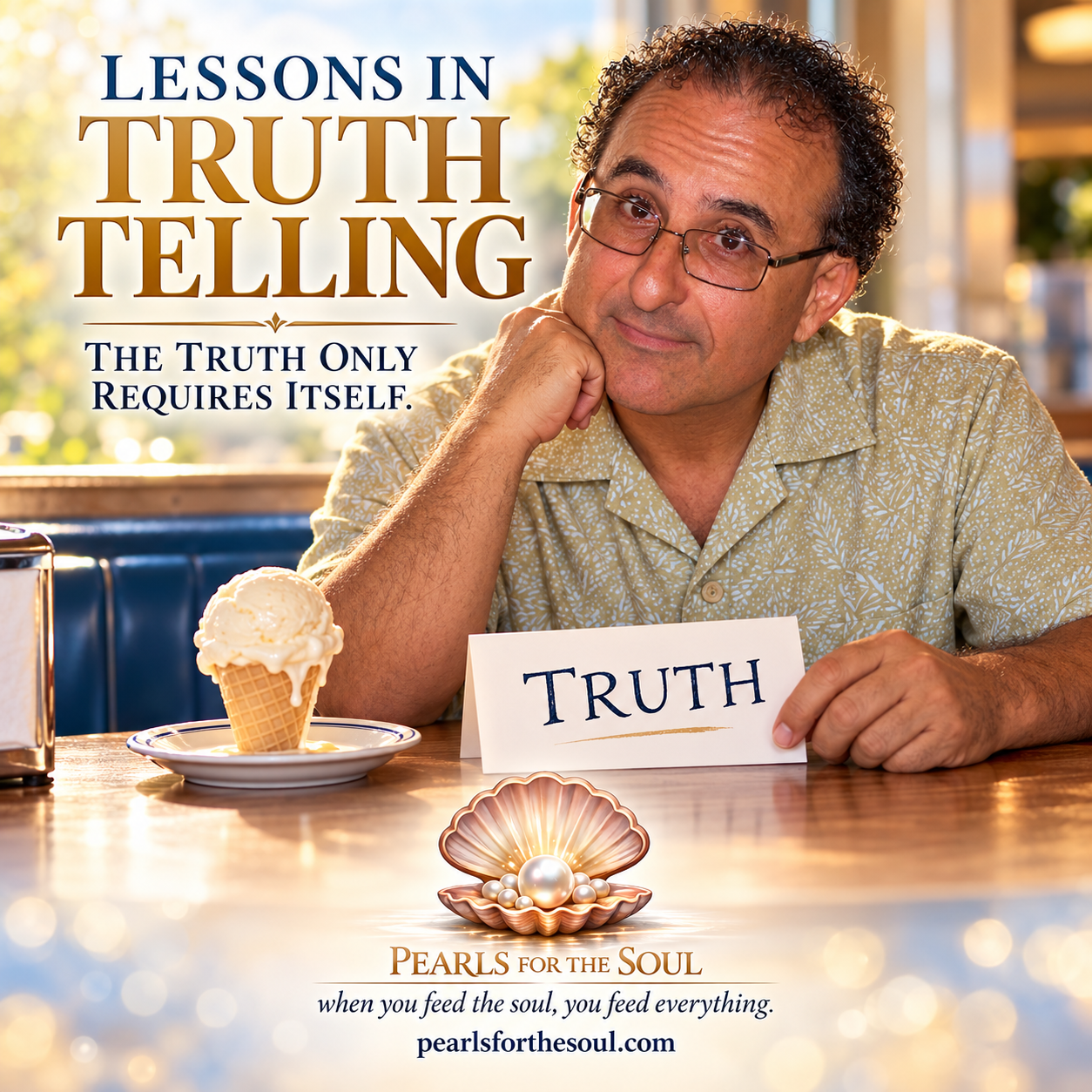
The truth only requires itself.
Everything added to disguise it becomes maintenance.
COMING CLEAN
I decided to explain what I could honestly recall.
Immediately, the atmosphere in the room changed for the better.
People relax when they no longer feel they must investigate every sentence. Truth clears away the extra work created by doubt.
A lie does not merely introduce questionable information. It introduces the possibility of a liar—and then every other statement must fight its way back to credibility.
You may win one moment with dishonesty and lose the trust required for everything that follows.
YOU CAN WIN AND STILL LOSE
Every time you tell the truth, you preserve something valuable:
Your credibility.
Your self-respect.
Your innocence.
Your freedom from the fear of being discovered.
When you knowingly trade truth for a temporary advantage, you begin spending your character.
You may gain something in the moment, but the hidden cost can be a piece of your peace—and possibly a little piece of your soul.
THE ICE-CREAM TEST
This reminds me of an old Candid Camera segment hosted by Allen Funt.
Two adorable young children were left in a room with two ice-cream cones. They were told the cones belonged to them, but they must not touch them until Allen returned.
Both children nodded in agreement while keeping their eyes fastened to the ice cream.
Then Allen left the room.
IT STARTED DRIPPING
The children watched the ice cream begin to melt.
One child reached over and gave the cone a little lick—strictly to prevent dripping, of course.
But you cannot lick an ice-cream cone only once.
No one can!
Soon, that child picked up the cone and became a licking machine. The other child watched, noticed their own melting cone and followed the example.
There they were, doing what seemed entirely reasonable under emergency ice-cream conditions.
THE EVIDENCE WAS EVERYWHERE
When the children heard Allen returning, they quickly placed the cones back where they belonged.
There was only one problem.
Ice cream covered their fingers, lips, chins and faces.
Allen entered and asked whether anyone had eaten the ice cream while he was gone.
The children looked at each other.
They looked at Allen.
They hesitated.
Then both said:
“No.”
Allen repeated the question while the audience roared with laughter. The two children slowly shook their heads, gaining confidence in their answer while wearing the evidence.
God bless them both.
Children may occasionally get away with that performance because they are children.
Adults—not so much.
THE SIMPLE LESSON
Evidence has a way of hanging around.
Sometimes it appears on a driving record. Sometimes it appears in earlier records. Sometimes it is melting down your fingers and decorating your face.
The truth does not guarantee that every consequence will disappear.
It guarantees that you do not have to carry the additional burden of protecting a lie.
FINAL THOUGHT
A difficult truth may cost you something today. Dishonesty can cost you your credibility tomorrow.
Tell the truth, keep your peace—and then go have an ice cream.
PEARLS INSIGHT
Truth telling builds credibility because consistency between our words, actions and evidence gives other people a reason to trust us.
PEARLS FROM THE BOOKS
“Epilogue of Ebenezer Scrooge: A Second Chance” reminds us that redemption begins when we stop defending the person we were, face the truth honestly and choose what we will become.
PEARLS CONNECTION
Think about a truth you may be decorating, delaying or carefully avoiding.
Ask yourself:
Am I protecting something valuable—or merely protecting myself from one uncomfortable moment?
The truth may be easier to carry than the explanation.
RICHIE SPEAKS
A lie needs rehearsals, repairs and a maintenance department. The truth shows up alone and still gets the job done.
FINAL SAY
If the evidence is already dripping down your chin, tell the truth and enjoy the ice cream.
— Richie
Pearls for the Soul
when you feed the soul, you feed everything.
https://pearlsforthesoul.com

Been expecting you