You cannot change what happened.
You can change the part you play from this moment forward.
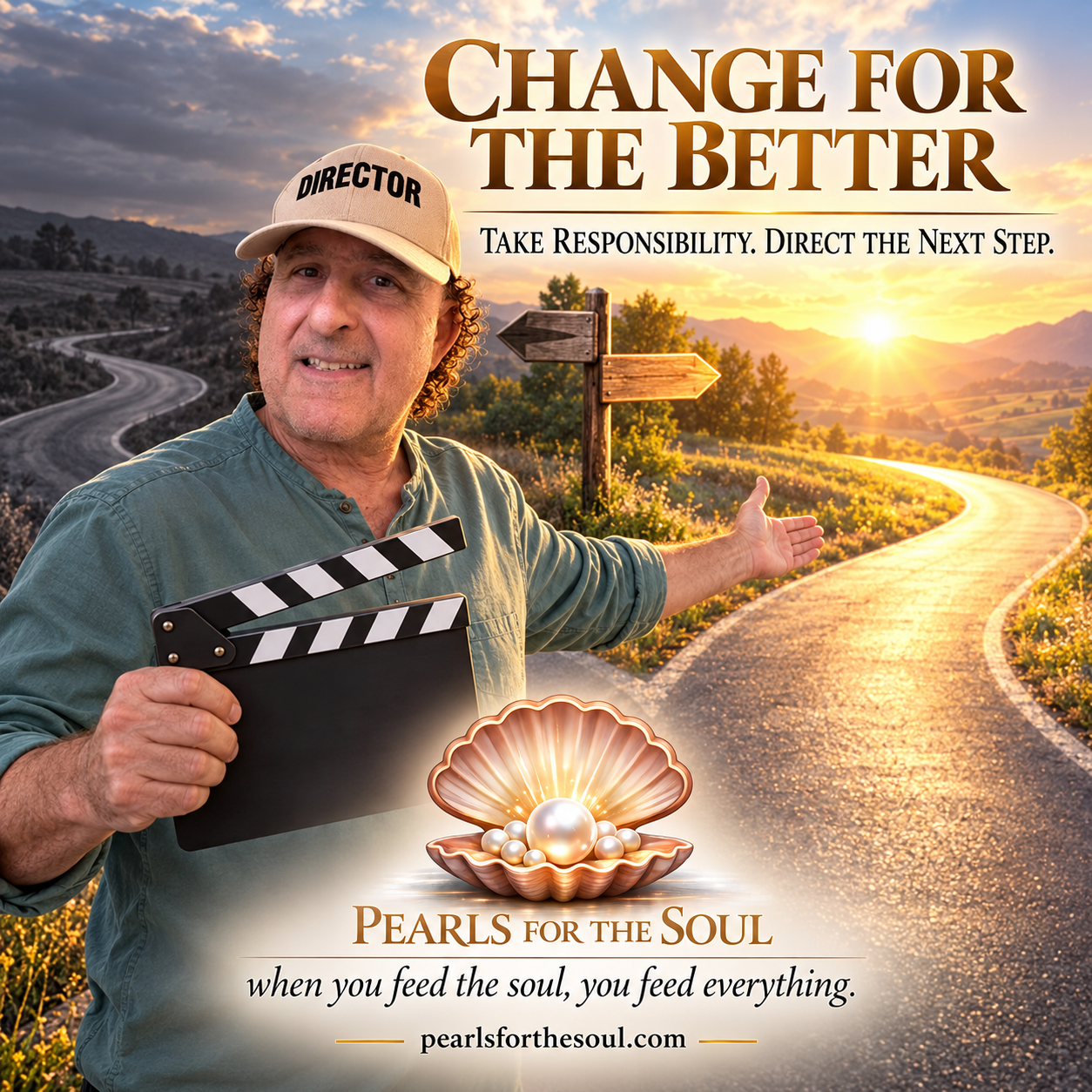
A better life begins when excuses stop directing the scene and responsibility calls, “Action!”
Do you want a better life?
How about a better outcome?
Then learn to take responsibility for the part you play—or fail to play—in your own life.
Learning opportunities appear everywhere we go, every day, in every imaginable subject.
The trouble is that low awareness, hypnotic thinking, denial, temptation, pride, and indifference can interfere with the lesson.
Life keeps presenting the class.
We keep skipping the homework.
Then we wonder why we are repeating the grade.

THE PROBLEM
Blame, excessive explanations, and excuses can invade our lives looking for a life of their own.
They want to feed and grow stronger while we grow wronger.
Yes—wronger.
That may not win an English contest, but it describes the condition rather well.
The ego provides its prideful input:
“It was not my fault.”
“I had no choice.”
“They made me do it.”
“This is just the way I am.”
Perhaps another person did contribute to the problem.
Perhaps circumstances truly were unfair.
But if we focus exclusively on everyone else’s part, we surrender the only part we can directly change—our own.
We see, but we do not see.
That little dynamic can rob us blind.
OUR INNOCENCE IS TESTED
This behavior often begins when we are young.
We get ourselves into a situation that may bring correction or consequences.
Instead of facing the issue, learning from it, and growing, we discover another option:
Create a story.
Change the details.
Point somewhere else.
Escape the consequence.
A tale of woe is born.
“HEY—I GOT AWAY WITH IT!”
We concoct an explanation that makes sense to us and launch it toward others to see whether it works.
Sometimes it does.
That small success can teach a very large and damaging lesson:
Blame works.
Denial works.
Deceit works.
Lying works.
Now we are navigating with a broken compass.
The direction is wrong, but the escape feels successful.
Before long, we may be consumed by the pattern without recognizing how it began. We enter a false way of living so quickly that we cannot trace the exact moment we joined it.
We escaped one consequence—and recruited many more.
THE PRICE OF GETTING AWAY
Avoiding responsibility may provide immediate relief.
But relief is not freedom.
The story must be remembered.
The excuse must be maintained.
The blame must be redirected whenever the truth returns.
That creates a high-maintenance life.
Energy that could be used to grow is spent protecting the version of events that keeps us from growing.
Eventually, the lack of healthy results becomes difficult to ignore.
That is where regret enters.
REGRET: MAKE FRIENDS WITH IT
Regret is not always the enemy.
Healthy regret is evidence that awareness has awakened.
It says:
“I see what I did.”
“I recognize the effect.”
“I do not want to repeat it.”
Regret becomes destructive when it traps us in endless self-condemnation.
It becomes useful when it moves us toward responsibility, apology, repair, and change.
See the damaging behavior.
Stop approving it.
Admit that it is not producing healthy results.
Then continue from regret toward sincere sorrow—and from sorrow toward corrective action.
Do not build a house in regret.
Use it as a doorway.
CHANGE COMES NEXT
The Greek word often connected to repentance carries the idea of changing one’s mind or direction.
Change is not merely feeling terrible about what happened.
It is turning.
Why must we turn?
Because repeating the same destructive behavior while expecting a different result keeps us walking in a circle.
A circle can involve plenty of movement.
It still does not take us anywhere new.
Real change interrupts the pattern.
“THEY DID IT!”
Maybe they did.
Other people can be wrong.
Parents can make mistakes.
Families can pass along unhealthy patterns.
Employers can behave unfairly.
Friends can betray us.
Partners can hurt us.
Life itself can deliver circumstances we did not request and did not deserve.
Taking responsibility does not mean accepting blame for everything that happened.
It means asking:
“What belongs to me now?”
“What can I learn?”
“What can I repair?”
“What can I stop repeating?”
“What is my next right step?”
Maybe they were wrong.
Now it is our turn to right what we can.
RESPONSIBILITY IS NOT SELF-BLAME
Self-blame says:
“Everything is my fault.”
Responsibility says:
“Not everything was my fault, but my response belongs to me.”
Self-blame attacks identity.
Responsibility examines behavior.
Self-blame leaves us ashamed and powerless.
Responsibility gives us something useful to do.
Responsibility means the ability to respond.
Once we recognize that ability, we regain movement.
HUMILITY
When we take responsibility for our actions—or our inaction—a beautiful process begins.
Humility arrives.
We may initially experience embarrassment, awkwardness, or discomfort as we recognize a response that was less than beneficial.
That discomfort does not have to destroy us.
Humility does not say:
“I am worthless.”
It says:
“I was wrong, and I am teachable.”
Pride must protect an image.
Humility is free to improve the person behind it.
When humility enters, grace finally has room to work.
THE MORAL COMPASS
Then something even better happens.
We begin listening again to our moral compass—also known as the conscience.
This faithful inner instrument can spare us tremendous grief when we stop arguing with it.
The conscience often speaks before the excuse department opens for business.
It whispers:
“Do not do that.”
“Tell the truth.”
“Apologize.”
“Walk away.”
“Try again.”
“Make it right.”
We may not always like its directions, but it has an excellent record of knowing when we are heading the wrong way.
TEMPTATION
Avoid the temptation to look exclusively outside yourself for the source of every inconvenience, conflict, or loss.
The other person may have played a part.
The circumstances may have contributed.
But what part are you playing now?
PAUSE FOR CAUSE.
Look honestly at your part—not to punish yourself, but to discover where your power to change still lives.
Once you reach that point, the next step often becomes clearer.
THE FIVE MOVEMENTS OF CHANGE
RECOGNIZE
See the pattern without decorating it, minimizing it, or assigning it entirely to someone else.
REGRET
Allow yourself to understand what the behavior cost you and others.
REPAIR
Apologize, replace, correct, restore, or make amends wherever doing so is appropriate and safe.
REDIRECT
Choose the better response before the old situation returns.
REPEAT
Healthy change is rarely one dramatic decision. It is a better decision practiced until it becomes a better way of living.
DIRECT THE NEXT SCENE
You cannot return to yesterday’s scene and give yourself different lines.
That production has wrapped.
But today’s scene is waiting.
You are still holding part of the script.
You can continue blaming the supporting cast, complaining about the lighting, and arguing with the director.
Or you can become responsible for your performance.
Cue humility.
Bring in the moral compass.
Place regret where it can teach instead of torture.
Then call:
“Action!”
FINAL THOUGHT
Taking responsibility does not mean carrying everything.
It means carrying what actually belongs to you.
That burden is lighter than the accumulated weight of excuses, denial, resentment, and repeated mistakes.
Do it for your own sake.
Exercise your ability to respond.
Instead of merely existing within old patterns, you will begin to live—truly live.
PEARLS INSIGHT
A better life rarely begins with controlling other people.
It begins by recognizing the choices, habits, attitudes, and responses that remain within our influence.
Change becomes possible when responsibility replaces helplessness.
PEARLS FROM THE BOOKS
“Epilogue of Ebenezer Scrooge: A Second Chance” is built upon this very movement.
Scrooge could have blamed his childhood, his losses, society, business, or the people surrounding him. His life changed only when he recognized what he had become and accepted responsibility for what he would become next.
A second chance is valuable because it comes with a first responsibility:
Use it.
PEARLS CONNECTION
An oyster cannot control every irritation that enters its life.
It can respond by transforming the irritation into something of value.
We cannot control every difficulty, injustice, mistake, or disappointment.
But the quality of our response helps determine whether the experience remains only an irritation—or eventually produces a pearl.
RICHIE SPEAKS
You may not be responsible for how the mess started.
But if you are standing in it holding the mop, perhaps life is giving you a hint.
PAUSE FOR CAUSE.
Stop directing blame.
Start directing change.
FINAL SAY
Do not waste today endlessly prosecuting yesterday.
Recognize what happened.
Accept your part.
Learn the lesson.
Repair what you can.
Then redirect your life toward something better.
You cannot control every scene, character, or surprise.
But you can take responsibility for the part you play.
The next scene is ready.
What will you direct?
— Richie
Pearls for the Soul
when you feed the soul, you feed everything.
https://pearlsforthesoul.com

Been expecting you