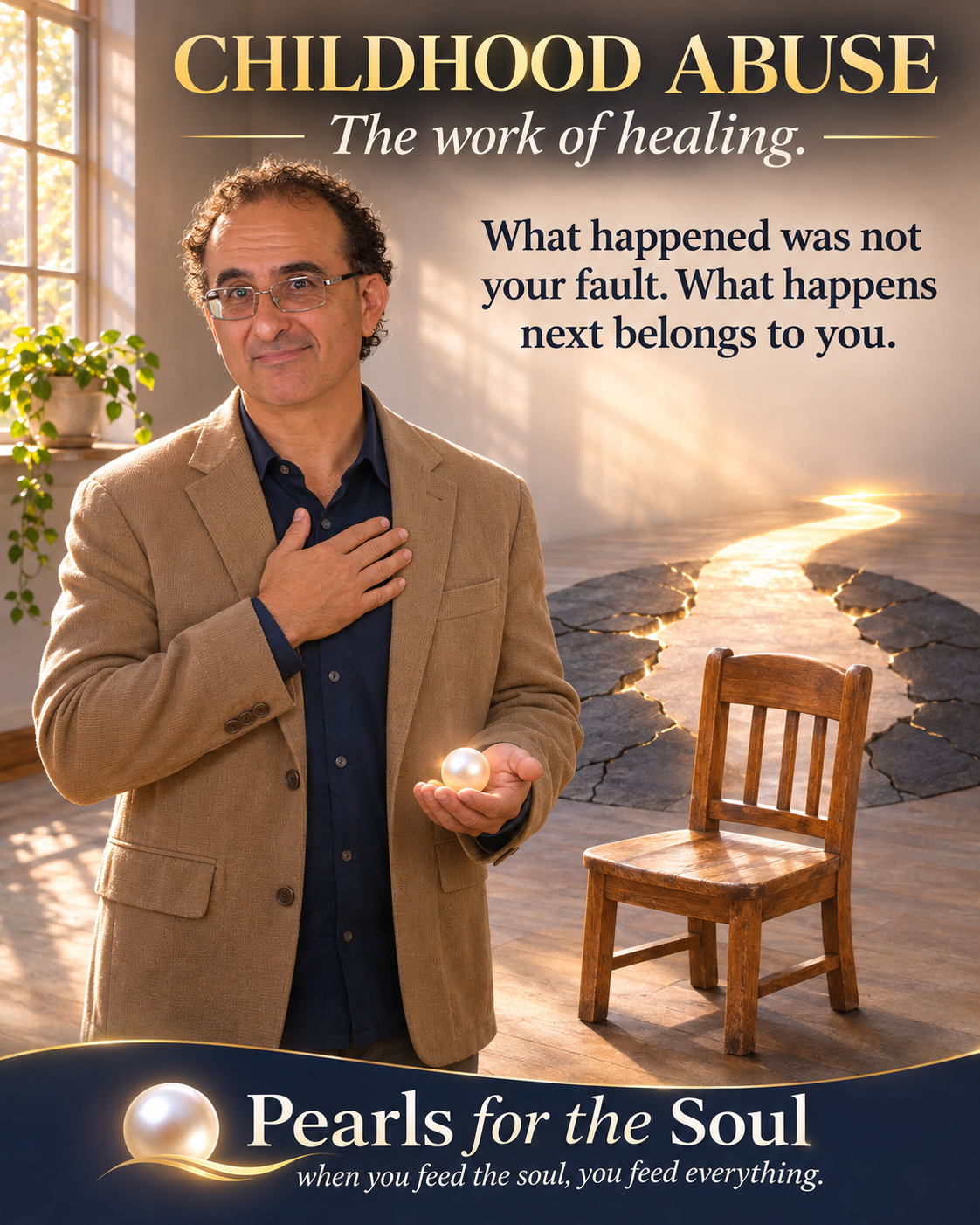
What happened to a child was never the child’s fault. Healing begins when the adult survivor can finally provide the safety that was missing.
CONTENT NOTE: This post discusses childhood physical abuse and its lasting effects.
BEING A KID SHOULD HAVE BEEN SAFE
This is a tough subject for adults who were raised in dysfunctional homes.
What happens during childhood does not necessarily remain there. The child grows up, but the experiences may follow that child into adulthood—in memories, reactions, relationships, fears, and ways of protecting oneself.
I know because I was one of those children.
MY FATHER’S WAY
My father was a disciplinarian who believed in hitting and punishment.
The more I misbehaved, the more punishment I received. The more punishment I received, the more I acted out. It became a cycle that kept escalating.
Looking back, I believe much of my behavior was a cry for love, attention, understanding, or help. I could not explain that as a child. I only knew how to behave like a child who was hurting.
Instead of discovering what was underneath my behavior, the punishment increased.
THE SOUND OF HIS CAR
Between approximately nine and thirteen years old, I often dreaded my father coming home.
My mother would tell him about whatever escapades or trouble I had gotten into that day. When I heard his car pull up, panic began building inside me.
I knew what was probably coming.
The bedroom door might burst open. There would be yelling and physical punishment. I would cry, cover myself, and try to get through it.
Sometimes I went numb.
I did not understand that response then. I understand it better now. When a child cannot escape physically, the mind may find another way to survive.
That was not discipline.
That was abuse.

NO CHILD DESERVES ABUSE
Children require guidance, boundaries, correction, and consequences. They do not require terror.
There is a difference between teaching a child and frightening one. There is a difference between correcting behavior and attacking the person behind the behavior.
No child deserves to be punched, kicked, beaten, humiliated, or made to fear the arrival of a parent.
No amount of misbehavior makes abuse the child’s fault.
MORE COMMON THAN WE REALIZE
Over the years, other adults told me similar stories about their childhoods.
The details differed, but the confusion was often the same:
How could someone who said they loved me also hurt me?
Why did I believe I caused it?
Why am I still affected many years later?
Parental abuse is confusing because the person a child depends upon for safety may also become the source of danger. Untangling that contradiction can take years.
THE GUILT HE CARRIED
I believe my father eventually realized what he had done. From what I observed, he never completely recovered from the guilt.
I cannot change his actions or undo my childhood. I can only decide what I will do with the life that followed.
My healing involved facing what happened, understanding that it was not my fault, and releasing as much resentment and hatred as I could.
That was my path.
Forgiveness, however, is personal. It should never be demanded from a survivor. It does not excuse the abuse, erase accountability, require reconciliation, or give an unsafe person renewed access.
Healing can happen with or without forgiveness.
THE ADULT PROTECTS THE INNER CHILD
The child I was could not protect himself.
The adult I became can.
Today, my inner child is protected by me—the adult now.
I can establish boundaries. I can leave unsafe situations. I can speak the truth about what happened. I can decide who receives access to my life.
Most importantly, I can tell that frightened child inside me:
You did not deserve it.
It was not your fault.
You are safe with me now.
MY TURN AS A PARENT
When I became a parent, I faced the same pressures every parent faces. Children test limits. They make mistakes. They can frustrate you.
I had a choice.
I could repeat what had been done to me, or I could stop the pattern.
I chose conversation, explanation, reasonable consequences, and time for everyone to calm down. I was not a perfect parent, but I refused to reproduce the terror I had known.
Breaking a cycle does not require perfection. It requires awareness, responsibility, and the courage to choose differently.
WHEN I SAW IT HAPPENING
There were times when I witnessed adults overreacting toward children in public.
I intervened when I believed a situation was becoming dangerous. I tried to calm the adult, redirect the energy, and help change the course of what was happening.
Perhaps I recognized the look in the child’s eyes.
Perhaps some part of me remembered waiting for somebody to step in for me.
We cannot always know what happens behind closed doors, but we should never ignore a child who appears to be in immediate danger.
ANGER, RESENTMENT, AND HEALING
Anger after abuse is understandable. It can tell us that a boundary was violated and that what happened was wrong.
Resentment may become exhausting, but survivors should not be blamed when trauma remains. Trauma can persist for many reasons. Healing may require safety, trusted support, firm boundaries, trauma-informed counseling, medical care, spiritual guidance, or time.
The goal is not to pretend the past did not happen.
The goal is to keep the past from controlling every part of the present.
BREAKING THE CYCLE
You may not have controlled what was done to you, but you can influence what happens through you.
You can refuse to pass the pain forward.
You can learn new ways to communicate. You can ask for help. You can apologize when you are wrong. You can protect children without humiliating them. You can become the safe adult you once needed.
That is how a family pattern begins to change.
One aware adult can interrupt generations of pain.
IF ABUSE IS HAPPENING NOW
If a child is currently being abused or appears to be in immediate danger, seek help from local emergency services, child-protection authorities, or a trusted qualified professional.
Silence protects the pattern.
Responsible action protects the child.
FINAL THOUGHT
Childhood abuse may explain some of our wounds, reactions, and fears, but it does not have to write the remainder of our story.
We cannot return to childhood and prevent everything that happened.
We can stand beside the child within us today.
PEARLS INSIGHT (SEO)
Healing from childhood abuse involves recognizing that the abuse was not the child’s fault, establishing emotional and physical safety, creating healthy boundaries, obtaining trustworthy support, and consciously breaking the cycle of generational trauma.
PEARLS FROM THE BOOKS
A lesson running through my books is that we cannot always choose what life hands us, but we can choose what we carry forward and what we finally put down.
PEARLS CONNECTION
The pearl begins with irritation and injury, yet it does not remain defined by the wound. Layer by layer, something different is formed around it.
We can do that too—not by denying the injury, but by building wisdom, protection, compassion, and purpose around what survived.
RICHIE SPEAKS
The child I was had no protection. The man I became finally stood beside him and said, “You are safe with me now.”
FINAL SAY
What happened was not your fault. What happens next belongs to you.
— Richie
Pearls for the Soul
when you feed the soul, you feed everything.
https://pearlsforthesoul.com

Been expecting you