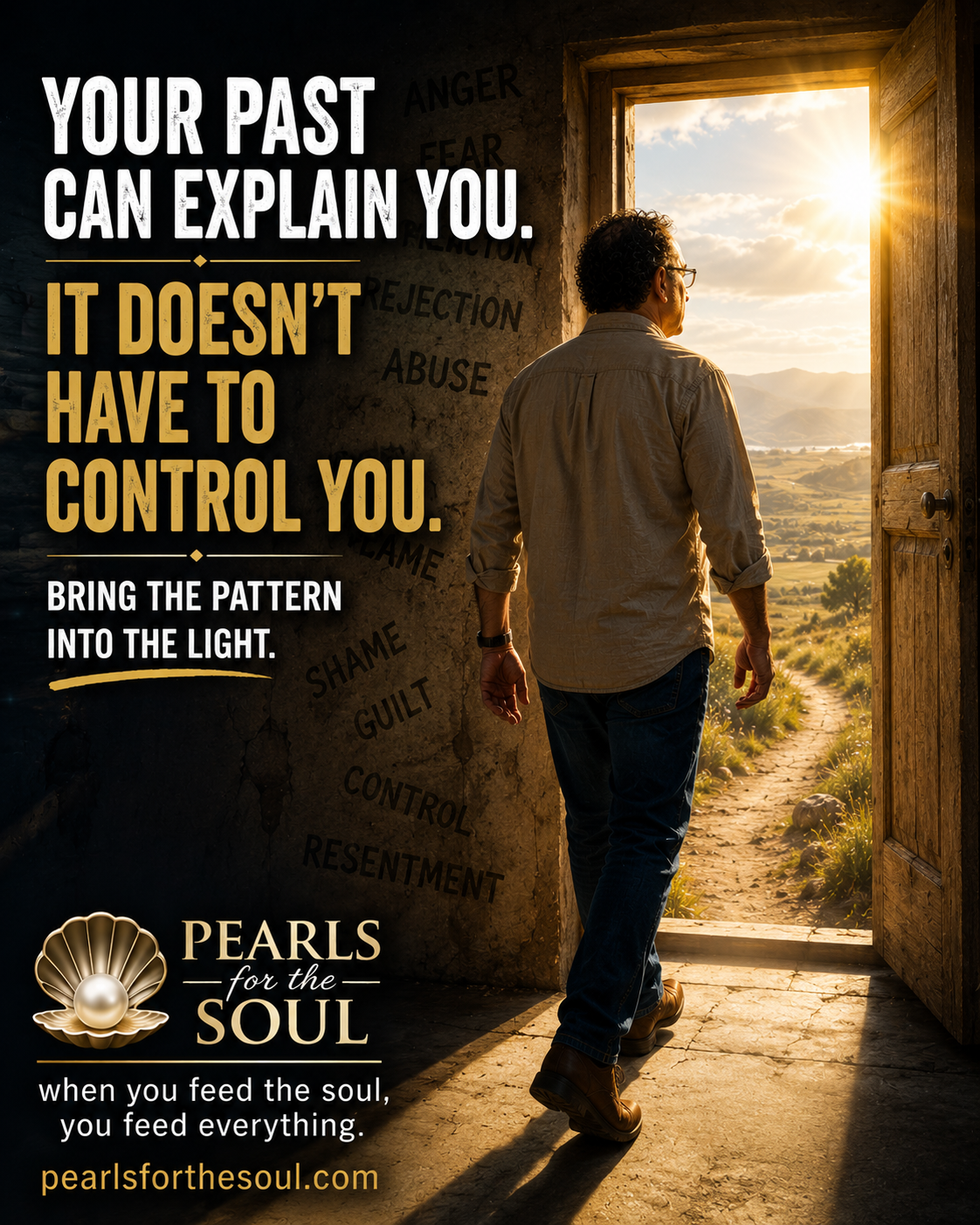
Some behaviors helped us survive one chapter of life…
Then followed us into chapters where they no longer belong.
That is when a coping pattern can become a problem.
The good news?
WHAT WAS LEARNED CAN OFTEN BE EXAMINED, CHALLENGED AND CHANGED.

Dysfunctional behavior.
Most people have seen it.
Some have lived around it.
Some have participated in it.
And some eventually reach the uncomfortable realization:
I AM DOING THINGS THAT ARE HURTING ME AND THE PEOPLE AROUND ME.
That realization is not the end of the story.
It may be the beginning of recovery.
People can develop unhealthy ways of thinking, reacting and relating for many reasons.
A chaotic home.
Abuse.
Neglect.
Fear.
Poor examples.
Repeated conflict.
Loss.
Trauma.
Or simply behaviors practiced for so long that they became automatic.
Not everybody who experiences hardship develops the same patterns.
But experiences can leave fingerprints.
And when those fingerprints begin interfering with relationships, work, peace of mind or good judgment…
IT IS TIME TO LOOK AT THEM.
IT IS WIDESPREAD
There is no useful purpose in pretending human beings never develop unhealthy patterns.
We do.
Defensiveness.
Manipulation.
Anger.
Withdrawal.
Control.
Blaming.
People pleasing.
Jealousy.
Sabotaging relationships.
Expecting rejection.
Creating conflict where none was necessary.
Repeating the same harmful choices while wondering why life keeps producing the same results.
The important question is not:
WHO CAN I BLAME?
The more useful question becomes:
WHAT AM I DOING NOW?
That is where personal power begins returning.
LOOK WITHOUT DESTROYING YOURSELF
Self-examination does not require self-hatred.
That is important.
You can look directly at something unhealthy in yourself without declaring yourself worthless.
In fact, honest observation requires enough courage to say:
THAT IS ME.
I DO THAT.
WHY?
What happens immediately before it?
What am I afraid of?
What am I trying to protect?
What do I believe will happen if I respond differently?
That kind of examination can reveal a great deal.
Sometimes other people see our patterns before we do.
That is why feedback can matter.
Listen.
Observe.
Be still long enough to consider whether there is truth in what you are hearing.
Not every criticism is accurate.
But dismissing every criticism guarantees that nothing gets examined.
WE CAME INTO THE WORLD LEARNING
A child arrives knowing very little about relationships.
The child learns.
By watching.
By experiencing.
By adapting.
If home is calm, certain behaviors are learned.
If home is chaotic, other behaviors may be learned.
If love is secure, one set of expectations may develop.
If love feels unpredictable, another set may develop.
Children often do whatever seems necessary to navigate the environment around them.
That may have been useful THEN.
But adulthood creates a problem.
A behavior learned at ten years old can still be operating at forty, sixty or eighty.
The circumstances changed.
THE PROGRAM DIDN’T.
That is when we have to update ourselves.
THE POISONED PART
Sometimes a person becomes so accustomed to conflict that peace feels unfamiliar.
Nothing is wrong…
So they unconsciously begin searching for what must be wrong.
A harmless remark becomes an insult.
A disagreement becomes rejection.
A delay becomes disrespect.
A spouse becomes the enemy.
A coworker becomes the problem.
Then the person reacts to something larger than what is actually happening.
Why?
Because yesterday has entered today’s conversation.
That is worth noticing.
The present deserves to be judged by the present.
Not automatically sentenced for something that happened years ago.
THE HOW AND WHY OF THE INTRUDER
Resentment can keep old injuries emotionally active.
Something happened.
It hurt.
Maybe badly.
Maybe unfairly.
Maybe somebody truly did fail you.
Recognizing that is not weakness.
And forgiveness does not require pretending that something harmful was acceptable.
But resentment can become expensive when it forces you to relive the same injury over and over.
The event happened once.
Memory can make it happen a thousand times.
That does not mean simply saying:
FORGET IT.
Some wounds require serious work.
Sometimes professional counseling is appropriate.
Sometimes boundaries are necessary.
Sometimes reconciliation is not appropriate at all.
Healing does not mean returning to unsafe circumstances.
It means refusing to allow the old injury to dictate the rest of your life.
YOU MAY HAVE BEEN WRONGED
You are allowed to say:
THAT WAS WRONG.
You are allowed to say:
THAT HURT ME.
You are allowed to grieve what you should have received and did not.
You are allowed to confront something honestly.
But eventually another question appears:
WHAT WILL I DO WITH MY LIFE NOW?
Because the person who hurt you does not deserve permanent ownership of your future.
At some point, recovery requires reclaiming authority over your present behavior.
They may have contributed to the wound.
YOU are now responsible for the healing work.
That is not blame.
That is power.
STOP PLAYING THE OLD PART
This is where change gets difficult.
The old behavior may feel natural.
You know the script.
You know your lines.
You know how the scene ends.
Someone says something.
You react.
They react.
You escalate.
They withdraw.
You feel abandoned.
You become angrier.
And everybody walks away wondering what happened.
Then the same play opens again next week.
Eventually somebody has to stop acting.
Maybe that somebody is you.
When the familiar trigger appears…
PAUSE FOR CAUSE.
Do not automatically perform the old response.
Ask:
What is actually happening?
What am I assuming?
What do I know?
What am I afraid of?
What would a healthier response look like?
That pause can interrupt years of conditioning.
WRONG CHOICES HAVE CONSEQUENCES
Choices matter.
Dishonesty has consequences.
Cruelty has consequences.
Manipulation has consequences.
So does refusing responsibility.
But guilt should serve a purpose.
Healthy guilt says:
I DID SOMETHING WRONG.
It can lead to confession.
Repair.
Apology.
Restitution.
Different behavior.
Unhealthy shame says:
I AM WRONG.
There is an enormous difference.
One can move you toward correction.
The other can trap you in self-condemnation.
The goal is not permanent punishment.
The goal is transformation.
WHAT TO DO
Do not hide the pattern.
EXPOSE IT.
Name it.
Study it.
Track it.
Ask what triggers it.
Ask what keeps reinforcing it.
Listen to trustworthy feedback.
Take responsibility for what belongs to you.
Repair what you reasonably can.
Set boundaries where they are needed.
Practice a different response.
And when the pattern is deeply rooted or connected with trauma, abuse, severe conflict, addiction, or repeated relationship breakdown…
GET QUALIFIED HELP.
There is no weakness in getting assistance with something that has been running unattended for years.
Light helps.
Truth helps.
Responsibility helps.
Faith may help.
Professional support may help.
But denial usually does not.
YOU ARE NOT REQUIRED TO KEEP REPEATING IT
One of the most dangerous sentences a person can say is:
THAT’S JUST THE WAY I AM.
Maybe it is the way you learned to be.
That is different.
Patterns are not automatically identity.
A person can become more aware.
More patient.
Less reactive.
More honest.
More secure.
Better at boundaries.
Better at listening.
Better at accepting responsibility.
Better at recognizing when yesterday is interfering with today.
Change may be slow.
But slow change is still change.
FINAL THOUGHT
Your history deserves to be understood.
It does not deserve unlimited authority over your future.
Look at what happened.
Look at what you learned.
Look at what you are still repeating.
Then decide what stays…
AND WHAT HAS TO GO.
The goal is not perfection.
The goal is healthier functioning.
Greater awareness.
Greater responsibility.
Greater freedom.
PEARLS INSIGHT
Dysfunctional behavior can develop from learned patterns, stressful environments, relationship dynamics, trauma, fear, or repeated coping strategies that no longer serve their original purpose. Change begins with awareness: identifying triggers, separating past experiences from present circumstances, accepting responsibility for current behavior, practicing healthier responses, and seeking appropriate support when patterns are deeply entrenched.
PEARLS FROM THE BOOKS
A recurring lesson in Pearls for the Soul is that awareness must eventually become action.
Seeing the pattern is important.
But seeing it is only the beginning.
Once you recognize what no longer belongs in your life…
YOU HAVE SOMETHING TO WORK WITH.
Truth brought into the light becomes usable.
And what becomes usable can begin to change.
PEARLS CONNECTION
This Pearl connects directly with:
HOW TO INCREASE YOUR PERSONAL AWARENESS
and
USE PROBLEMS, CHALLENGES AND SURPRISES TO YOUR ADVANTAGE
Awareness reveals the pattern.
Challenge exposes where the pattern operates.
Then responsibility asks:
WHAT WILL I DO DIFFERENTLY NEXT TIME?
That is how old programming begins losing authority.
RICHIE SPEAKS
Something happened to you?
LOOK AT IT.
Something got programmed into you?
FIND IT.
Something unhealthy keeps repeating?
STOP DEFENDING IT.
Bring it into the light.
Ask what belongs to yesterday…
And what you are carrying into today.
Then do the work.
Learn.
Correct.
Heal.
Get help when you need it.
And stop giving an old chapter permission to write the ending.
I want you functioning…
FREE…
WHOLE…
AND WELL.
— Richie
Pearls for the Soul
when you feed the soul, you feed everything.
pearlsforthesoul.com

Been expecting you