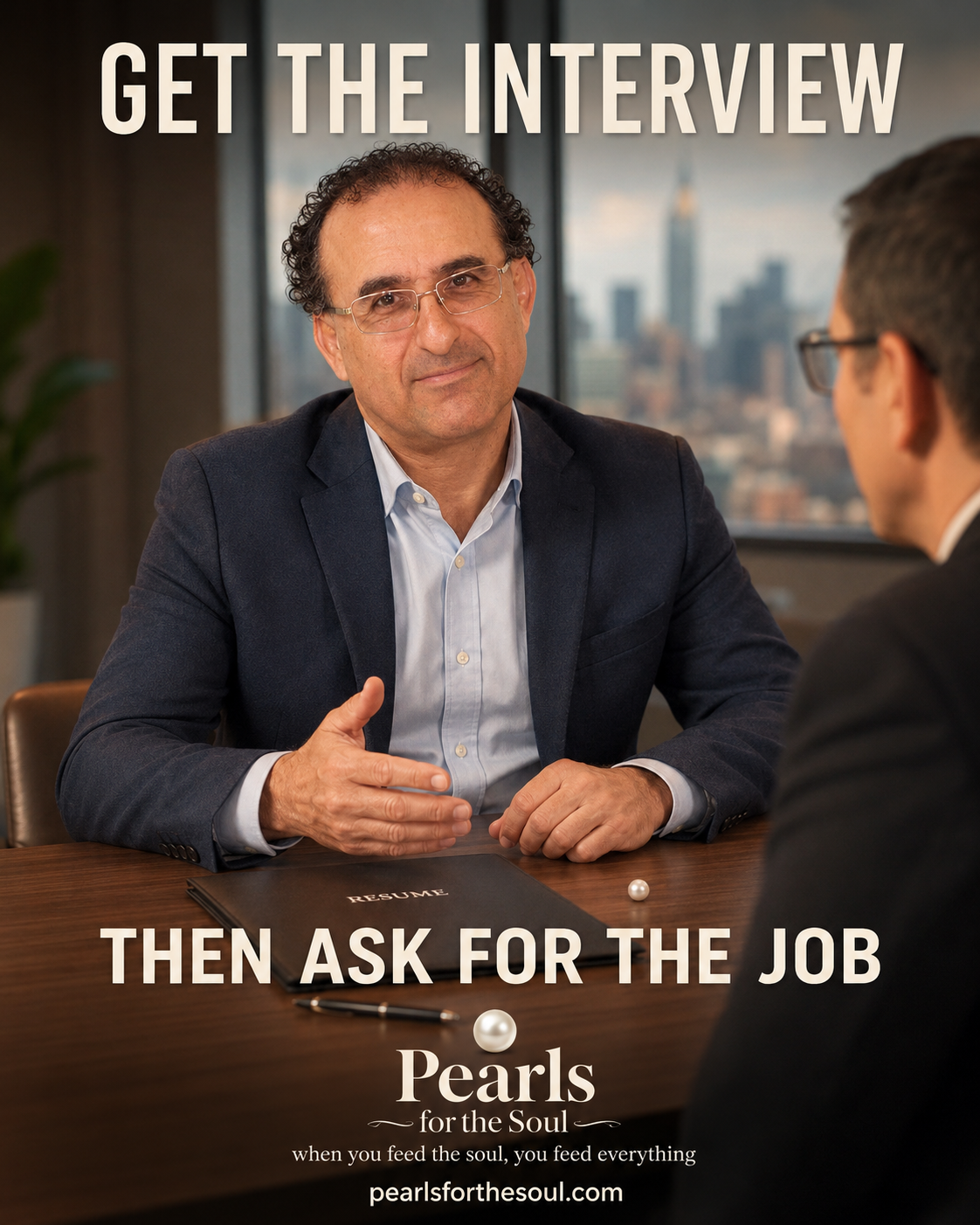
Your resume has one primary job:
Get you the interview.
Then the interview has one primary job:
Give them a reason to choose YOU.

The purpose of a resume is not to become a diary of your entire working life.
Resumes are interesting tools, and a lot of people do not know how to wield them.
So let us begin by repeating the purpose:
THE RESUME IS THERE TO GET YOU AN INTERVIEW.
That is its job.
Not to tell your entire life story.
Not to list everything you have ever done since delivering newspapers at age twelve.
LOL.
It has to create enough interest for somebody to say:
“I want to meet this person.”
That is why I like comparing a resume to billboard advertising and short radio announcements.
QUICK AND TO THE POINT
Think about a billboard.
People are moving past it.
The advertiser has very little time to get the message across.
The headline has to work.
The image has to work.
The contact information has to work.
Too much information and nobody reads it.
A resume operates under a similar pressure.
The person reviewing it may have many others sitting beside yours.
That means you want your resume to be:
Neat.
Professional.
Easy to read.
Relevant.
Focused.
And immediately understandable.
Do not make the reader work to figure out why you belong in the pile marked:
INTERVIEW.
FIRST GLANCE HAS GOT TO WORK
The first glance matters.
Your information should feel organized and intentional.
Think of your resume as an arrow.
Where is it pointing?
Toward THIS particular job.
One useful approach is to reflect the qualifications that genuinely apply to you back into your resume.
If the employer is seeking leadership experience and you have it…
show it.
If they need customer service…
show it.
If they need technical ability…
show it.
If they need management…
show it.
Do not bury the thing they are looking for on page three under:
“Other miscellaneous responsibilities.”
LOL.
Stay focused.
Your contact information should be clear and simple.
Your experience should support the position you are pursuing.
The question behind every section should be:
Does this help explain why I should get the interview?
If not, reconsider whether it needs to be there.
WHY YOU?
This is where things get interesting.
Why YOU?
There may be dozens of applicants.
Sometimes hundreds.
Many of them may have similar qualifications.
So what separates you?
That is your edge.
Maybe it is experience.
Maybe communication.
Maybe an unusual combination of skills.
Maybe leadership.
Maybe reliability.
Maybe your ability to explain complicated things simply.
Maybe you have already solved the type of problems this employer needs solved.
Find the edge.
Then make sure they can SEE it.
Do not expect a hiring manager to dig through your resume like an archaeologist looking for buried treasure.
Put the treasure where it can be found.
YOUR RESUME SHOULD SOUND LIKE YOU — ONLY TIGHTER
There is another mistake people make.
They begin writing a resume and suddenly turn into somebody who speaks a language they have never spoken in their life.
LOL.
Everything becomes:
“Strategically leveraged cross-functional synergies to maximize organizational outcomes.”
What did you actually do?
Maybe:
“Led a five-person team that improved customer response time.”
Now I know something.
Use professional language.
Absolutely.
But let a human being remain inside it.
A resume should be polished.
It should not sound like a robot applied for the job.
THE INTERVIEW CHANGES EVERYTHING
Once you receive the interview, congratulations.
The resume has completed its assignment.
Now YOU have to show up.
And I mean YOU.
Not a memorized machine.
Not somebody desperately trying to provide the “perfect answer” to every question.
Be prepared.
Know the company.
Know the position.
Know your own experience.
Know why you are interested.
Then communicate naturally.
This connects with something I have said before:
People buy from people first.
Employers do too.
They are listening to your answers, yes.
But they are also experiencing:
Your manners.
Your confidence.
Your preparation.
Your listening skills.
Your enthusiasm.
Your humility.
Your ability to communicate.
And whether they can imagine working with you.
Confidence matters.
But confidence with humility works even better.
HERE IS ANOTHER GOOD ONE
Once the interview is nearing its conclusion, there is one dynamic that escapes quite a few people:
ASK FOR THE JOB.
Yes.
Ask for it.
You do not have to bang on the table and scream:
“HIRE ME!”
LOL.
But make your interest clear.
When it becomes your turn to speak, say something along the lines of:
“I want this job.”
Then briefly explain why.
Not twenty minutes.
Keep it clean.
“I believe my experience in ______ would allow me to contribute quickly. I like what I have learned about the position and the company, and I would very much like the opportunity.”
Then ask:
“What are the next steps?”
Or, if the conversation is warm enough:
“When do I start?”
Said with confidence and a smile, that can make a memorable closing.
WHY ASK?
Because employers should not have to guess whether you actually want the position.
Some candidates leave interviews trying so hard to appear cool and detached that nobody knows whether they are interested.
If you want the job…
say so.
Enthusiasm is not desperation.
There is a difference.
LISTEN AS MUCH AS YOU TALK
Here is another Richie addition worth remembering.
An interview is not a speech contest.
Listen.
The interviewer is giving you information throughout the conversation.
What problems are they trying to solve?
What do they emphasize?
What questions keep coming back?
What seems important to them?
Listen carefully and connect your experience to what they are actually telling you.
Sometimes the answer you prepared in the parking lot is not the answer the room needs.
LISTEN TO THE ROOM.
A GOOD INTERVIEW GOES BOTH WAYS
You are also interviewing them.
Do I want to work here?
Does this environment fit me?
Does the job match what was advertised?
Do I respect the people I am meeting?
Can I see myself doing this work?
Money matters.
Benefits matter.
But fit matters too.
The wrong job can become expensive even when the paycheck looks good.
So bring curiosity with you.
Ask good questions.
A person who asks thoughtful questions often reveals just as much as a person who gives good answers.
RICHIE SPEAKS
Here is the short version.
First:
GET THEIR ATTENTION.
That is the resume.
Second:
GET IN THE ROOM.
That is the interview.
Third:
LET THEM EXPERIENCE YOU.
Your knowledge.
Your preparation.
Your manners.
Your confidence.
Your personality.
Fourth:
ASK FOR THE JOB.
Do not spend all that effort getting to the finish line and then become shy about crossing it.
LOL.
PEARLS INSIGHT
Successful job interviewing begins before the interview itself. A focused resume should quickly communicate relevant qualifications and create enough interest to earn a conversation. Once in the interview, preparation, confidence, listening, professional manners, clear communication, and genuine enthusiasm become part of the decision.
PEARLS CONNECTION
This Pearl connects directly with credibility, transparency, aptitude, and the power of being yourself.
Aptitude asks:
What are you good at?
Transparency asks:
Can they see the real you?
Credibility asks:
Can they believe what you tell them?
Being yourself asks:
Can they imagine working with YOU?
That is the package.
FINAL THOUGHT
A resume opens the door.
But once the door opens, the paper cannot walk through it for you.
You have to.
Know what you bring.
Communicate it clearly.
Treat people well.
Listen carefully.
Show some confidence.
Then when the opportunity presents itself…
ASK FOR THE JOB.
Sometimes the difference between the person who gets hired and the person who almost gets hired is that one of them made it unmistakably clear:
I WANT TO BE HERE.
— Richie
Pearls for the Soul
when you feed the soul, you feed everything.
https://pearlsforthesoul.com

Been expecting you