When something goes wrong, hindsight tells us what everyone else should have done.
Honesty asks a harder question: What part did I play?
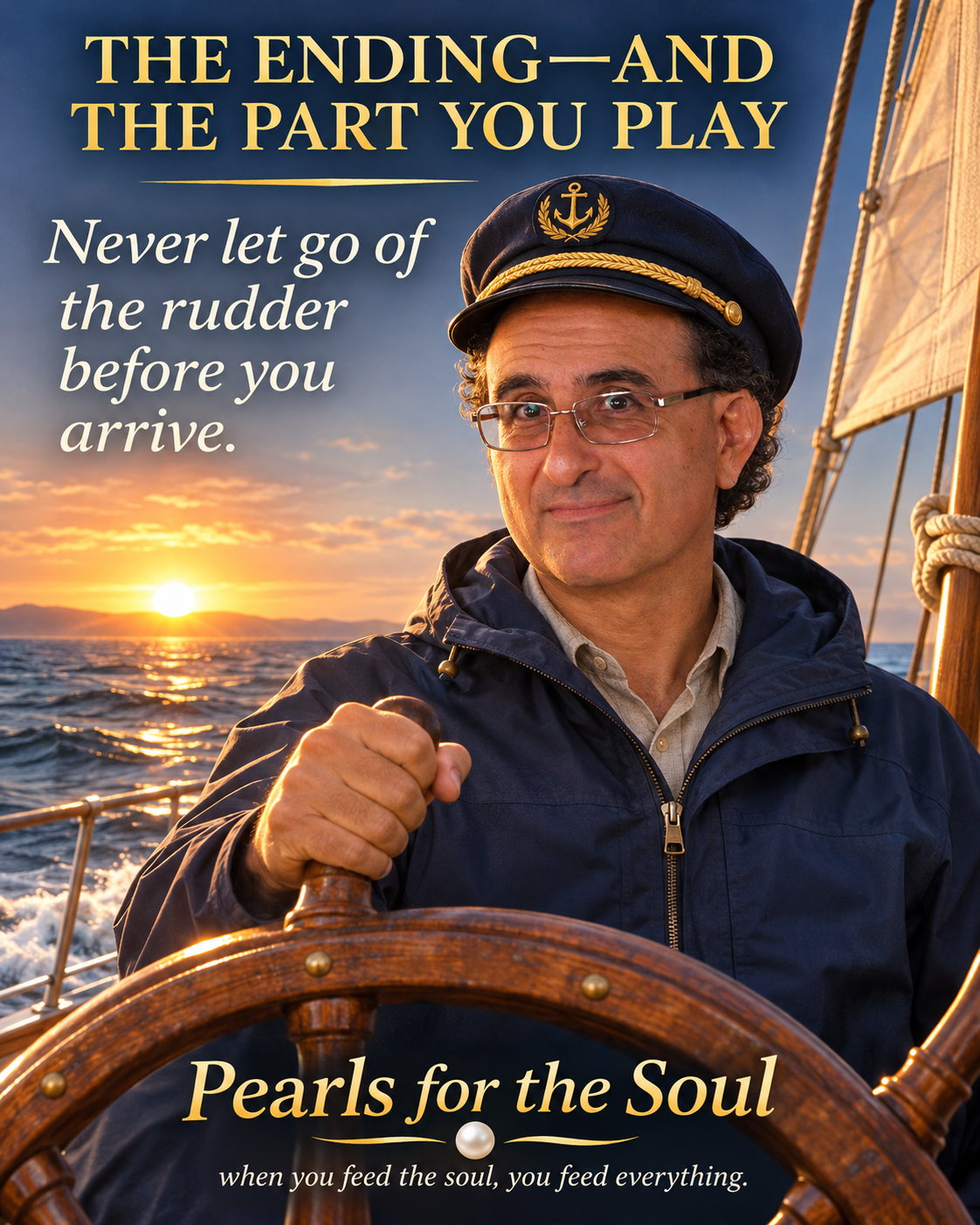
THE ENDING—AND THE PART YOU PLAY
We often become outspoken after something has gone full circle. More often than not, our critique of the outcome is negative.
This is brought to us courtesy of what they call hindsight—looking behind at events that have already passed and deciding they could have been handled better or should never have happened at all.
Yet one fact usually remains:
We had a hand, a voice, or a choice somewhere in those events.
So, what happened?

WHERE WERE YOU?
Being in the moment is no myth.
When you are truly present, the advantages are obvious and already working for you. Go to your moment—wherever and whatever it is—and you will find yourself either doing what should be done or avoiding it.
I am speaking about the focus that comes from living in the now without unnecessary interference.
INTERFERENCES
Distractions tend to remove us from the moment. Excessive behaviors can do the same.
Sedating ourselves with pills, drugs, alcohol, or other escapes can affect our ability to recognize what the moment requires.
Present within each moment are signals, choices, and opportunities. We may participate or refuse, but either response plays a part in what comes next.
RESULTS DON’T LIE
Here is where all of us must eventually go, whether we like it or not:
Results do not lie.
A lack of results does not lie either.
What makes the difference?
The part you played—or did not play.
Try as you may, you cannot escape accountability and responsibility. You can only deny them.
Remember, other people may see our contribution when we do not, just as we can sometimes see theirs.
Distance may provide an advantage: objectivity. Being removed from the situation, even temporarily, can allow us to see what emotion previously hid.
DOES BLAME MAKE IT RIGHT?
Why leap into the blame game?
Blame is often an afterthought gone wild. It stalls reality, invites dishonesty, and provides people who are arguing or making excuses with a temporary place to hide.
But they cannot hide there for long.
Reality and truth cannot be negotiated. They are like the sun: you cannot turn them off. You can only step into darkness to avoid seeing them.
BUSINESS RELATIONSHIPS
Partnerships, teams, and staff members can form an excellent combination for accomplishing a shared purpose.
Problems will arise while pursuing that purpose. However, we often prepare for problems involving the work while forgetting those created by human nature.
Personalities, misunderstandings, pride, fear, and ambition will all be tested along the way.
Never forget the work in teamwork.
PERSONAL RELATIONSHIPS
If you have ever visited small-claims, family, or criminal court, you have probably heard people offer completely different versions of the same event.
The people involved tell the story one way. Those outside the situation may see something the participants cannot.
Objectivity has a way of speaking clearly when personal emotion stops shouting over it.
PLANNING
It is wise to create an outline or pathway leading toward the larger picture.
A plan gives us something to consult and return to whenever we wander, make an error, or get carried away.
When thoughtfully prepared, a plan can tell us how to begin, what actions may be required, what we might reasonably expect, and where we could land—whether we succeed or fall short.
A plan does not guarantee the ending, but it helps us recognize when we are drifting.
TENACITY
Tenacity means taking a firm grip and refusing to let go simply because the journey becomes difficult.
It is an able tool for making sure that what we start has a chance to be finished.
Tenacity is like insurance for an endeavor.
If you doubt this, reverse the thought. Remove tenacity and see how quickly the effort becomes vulnerable to indifference, excuses, interference, delay, and general theft of purpose.
NOTHING IS THAT HARD
Our thinking can make something seem harder than it is.
There is a paradox here because thinking things through is necessary. We must explore the order, the details, and the method of implementation.
However, the minute you overthink, you may sink in that thinking.
Thought then becomes a distraction or burden instead of a useful tool.
Most things begin simply.
Why?
So we will consider beginning them.
THE END
How interesting those two words are.
Was the destination the payoff? Was it the journey? Was it both?
The beginning and everything in between deserve equal mention because each played a part in the ending.
When you have done all that you reasonably and correctly can, move forward. Expect feedback, surprises, and new information.
Then remember one important thing:
KEEP YOUR HANDS ON THE RUDDER
Never let go of the rudder before you arrive.
Changes will be required along the way because everything is in a constant state of movement. When change surfaces, we course-correct.
That is our part.
The ending is connected to the beginning, every decision, every interruption, and every correction made in between.
In the end, it may all make sense—if we remain present and continue doing our part.
FINAL THOUGHT
Hindsight can teach us, but it cannot change what has already happened.
Its real value is revealed when we use what we learned to take greater responsibility for what happens next.
PEARLS INSIGHT (SEO)
Personal accountability means recognizing how our decisions, distractions, planning, persistence, and course corrections influence results. Successful leadership and stronger relationships begin when we stop assigning all responsibility elsewhere and honestly examine the part we played.
PEARLS FROM THE BOOKS
An ending rarely belongs to one final moment.
It is assembled from the choices made at the beginning, the adjustments made in the middle, and the willingness to continue when letting go would be easier.
PEARLS CONNECTION
A pearl does not appear complete at the beginning.
It develops gradually through time, response, and continuing change. Our results are often formed the same way—not by one grand decision but by many smaller choices that eventually become an ending.
RICHIE SPEAKS
You cannot steer yesterday’s boat.
You can examine where it drifted, learn why it drifted, and place your hands more firmly on today’s rudder.
That is where your power is.
FINAL SAY
Before criticizing how something ended, ask what you contributed along the way.
Accept your part, make the necessary correction, and keep your hands on the rudder until you arrive.
— Richie
Pearls for the Soul
when you feed the soul, you feed everything.
https://pearlsforthesoul.com

Been expecting you