YOUR CHARACTER AND REPUTATION DEPEND ON THIS
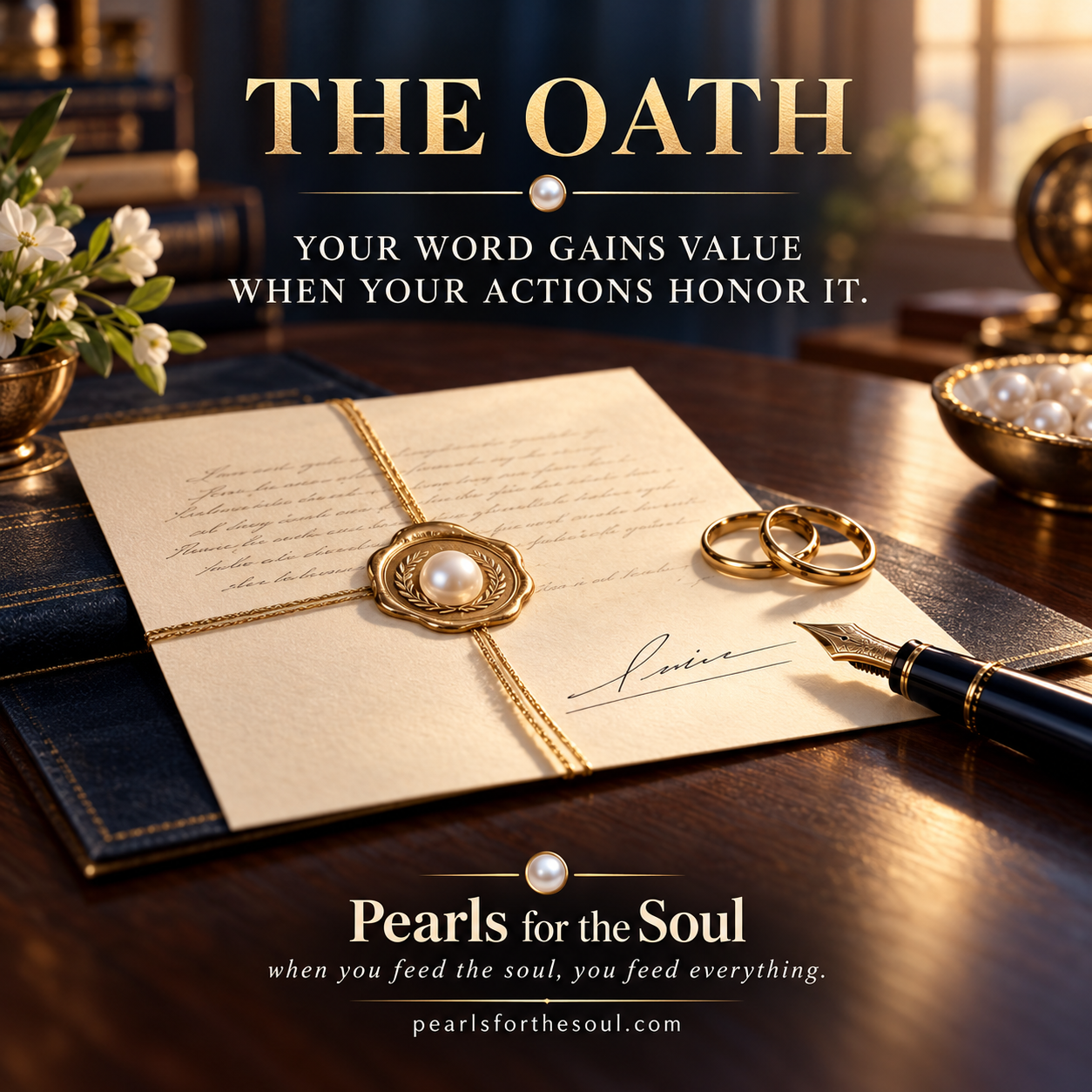
A promise describes what you intend to do. Your actions reveal whether your word can be trusted.
THE OATH (LIFE SWEAR)
Two people decide to marry.
For centuries, marriage ceremonies have marked a significant change in people’s lives. At some point, the ceremony became joined with a promise—an oath expressing a high level of commitment.
Traditional marriage vows speak of remaining together in sickness and health, for richer or poorer, for better or worse, to love and cherish.
The words have been updated and personalized over time, but their purpose remains:
To state openly what two people promise to honor.
A commitment, however, should never be interpreted as requiring someone to remain in abuse, danger or deliberate harm. A worthy oath must respect the dignity and safety of everyone involved.
THEN THEY ADDED…
The word “solemn.”
A solemn oath is approached seriously, honestly and with dignity. For many people, it also invites divine witness or blessing.
The words announce that this is not a casual statement.
Something meaningful is being placed behind them.
OATH OF OFFICE
Many positions of public responsibility require an oath of office.
Government officials, peace officers, members of the military and others pledge loyalty to the duties and principles of the position—not merely to its title or benefits.
The oath reminds them that authority arrives with responsibility.
The position may belong to the person temporarily.
The duty is larger than the person holding it.
OATH OF ALLEGIANCE
The Pledge of Allegiance expresses loyalty to the United States and its flag.
People becoming citizens take a formal and detailed oath as part of naturalization.

The words matter because they represent belonging, responsibility and participation in a shared society.
But words alone cannot carry the full promise.
Citizenship is also demonstrated through conduct.
THE PURPOSE OF AN OATH
An oath can bind us to our duties, to one another and to a shared interest.
It identifies where the buck stops.
Someone gives their word and accepts responsibility for carrying it out.
A promise may last for a few minutes, several years or an entire lifetime.
Its duration may differ, but its credibility always depends upon the actions that follow it.
YOU CAN MAKE YOUR OWN OATH
Remember Scarlett O’Hara in Gone with the Wind?
She raises her voice to the heavens and vows that she will never go hungry again.
The declaration marks a turning point because it turns suffering into determination.
We also make personal oaths:
To care for our families.
To change a harmful habit.
To finish what we started.
To become more dependable.
To live according to our faith or conscience.
A personal oath can provide direction—but only if we continue walking toward it after the emotion of making it has passed.
WILL YOU TAKE THE STAND?
In court, a witness promises to tell the truth, the whole truth and nothing but the truth.
Some people make that promise on a sacred book. Others affirm it upon their honor or conscience.
Why such seriousness?
Because testimony can affect property, freedom, reputation and human lives.
The stakes require more than casual conversation.
They require truth and accountability.
“I WILL NEVER FORGIVE YOU FOR THIS”
Whoa.
Oaths can also be made in anger.
Emotion and irrational thinking may produce powerful declarations that express pain—but not necessarily our considered intentions.
Behind “I will never forgive you” may be another message:
“This hurt me so deeply that I do not know how to process it.”
That does not make the injury acceptable.
It reminds us to examine what the statement is actually trying to communicate before turning a painful moment into a permanent vow.
“GO TO HELL”
This phrase is often thrown into an argument for maximum effect.
But pause and consider its actual meaning.
Would we genuinely wish endless suffering upon another person because of one conflict, failure or offense?
Anger reaches for the strongest weapon available.
Wisdom asks whether we truly intend to use it.
JUDGE NOT—and you will not be judged.
JUDGE NOT
It is impossible to examine every second, influence and circumstance that formed another person’s life.
Everyone began as an innocent child.
Experience, opportunity, hardship, kindness and injury went to work—some invited and some not.
This does not excuse harmful behavior or remove accountability.
It should, however, encourage humility when we decide that one act tells us everything about an entire person.
WHATEVER MEASURE YOU RELEASE
The standard we use to measure others may eventually be used to measure us.
Why?
Because once we declare a standard fair for somebody else, we invite that same standard into our own lives.
Accountability is necessary.
Courts, juries, supervisors and institutions sometimes have a lawful responsibility to make judgments.
In ordinary life, however, fairness asks us to use care before delivering permanent conclusions about temporary failures.
IMPLIED CONDUCT
Many of our daily promises are never spoken aloud.
When we accept employment, we agree to perform certain duties.
When we enter a public space, we accept basic expectations of conduct.
We wait our turn.
We honor agreements.
We respect reasonable boundaries.
We do not push in front of everyone else because our schedule feels more important.
These are informal oaths that help people live and work together.
THE DRIVER’S LICENSE
A driver’s license is more than permission to operate a vehicle.
It is conditional upon responsible conduct.
Most of us did whatever was required to earn the privilege. Some later tested the limits of speed, attention or good judgment.
The privilege can be restricted or removed when conduct demonstrates that it is being misused.
The license carries an implied promise:
I will share the road responsibly.
WORDS DRIVEN BY OATH
Words can help, hurt or hinder.
Behind our spoken words is something quieter—the personal code we act out each day before our conscience.
Some people make a silent oath to be dependable.
Others choose kindness, service, honesty, courage or a lighthearted approach to life.
We may never formally announce these commitments.
People discover them by watching how we live.
THE RICHIE REVERSE RULE
Remove trust from a promise.
What remains?
Words.
Remove action from commitment.
What remains?
Intention.
Remove integrity from an oath.
What remains?
A performance.
Now reverse it.
When words, actions and integrity work together, trust has somewhere solid to stand.
THE LIFE SWEAR
Your most important oath may not be spoken in a ceremony, courtroom or public office.
It may be the quiet promise you make every morning about the person you intend to be.
You will not honor it perfectly.
Nobody does.
But when you fall short, acknowledge it, repair what you can and return to the promise with greater understanding.
That is how your word becomes your way of life.
FINAL THOUGHT
An oath is not proven at the moment it is spoken. It is proven whenever keeping it becomes inconvenient, difficult or unseen.
PEARLS INSIGHT (SEO)
Promises build trust when words and actions remain aligned. Whether the commitment involves marriage, work, citizenship, friendship or personal growth, integrity means accepting responsibility, honoring reasonable agreements and correcting our course when we fall short.
PEARLS FROM THE BOOKS
“Your word gains value when your actions continue speaking after your voice becomes quiet.”
PEARLS CONNECTION
Choose one promise you have made—to another person or to yourself. Identify one action you can take today that places integrity behind your words.
RICHIE SPEAKS
Do not make your promises larger. Make the actions supporting them stronger.
FINAL SAY
Give your word carefully—and live so it can be trusted.
— Richie
Pearls for the Soul
when you feed the soul, you feed everything.
Website: https://pearlsforthesoul.com
Been expecting you